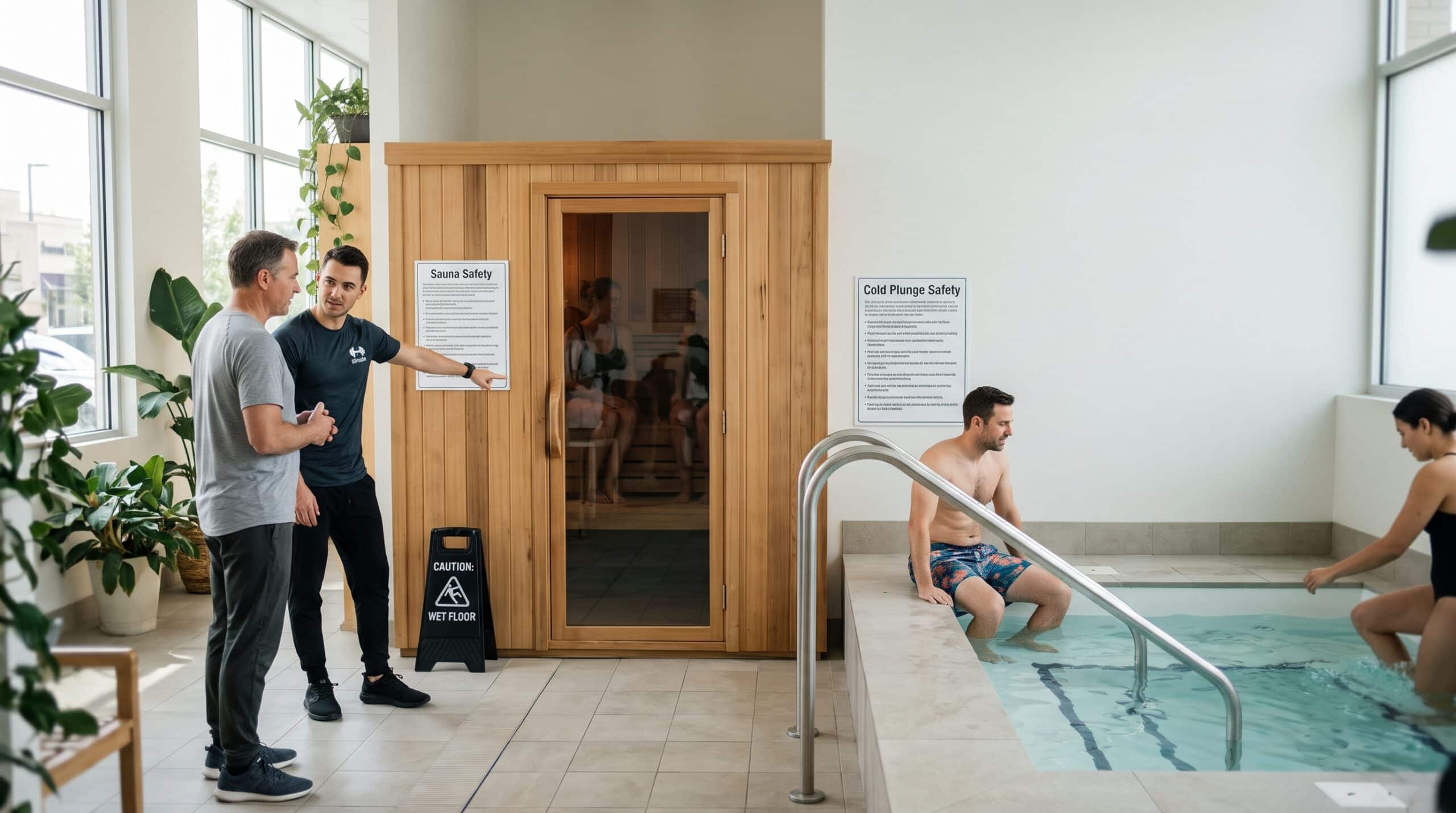
Sauna safety in a gym or wellness center comes down to posted rules, short sessions, health screening, someone checking on users, regular cleaning and a clear emergency plan. The same rules apply to cold plunges, and contrast therapy (moving between hot and cold) needs both sets plus extra care on the switch.
Heat and cold recovery is a popular add-on in fitness. It’s also a new kind of risk for owners used to treadmills and barbells. This guide covers the rules to post, how to screen and supervise, how to clean and maintain equipment, and which coverage usually responds when a member gets hurt. It’s about risk, not medical advice. Anyone who feels unwell after heat or cold exposure should see a doctor.
What is sauna safety?
Sauna safety is the set of rules, checks and habits that keep people from overheating, fainting, burning themselves or slipping in and around a sauna. For a business, it covers posted rules, time limits, user screening, supervision, cleaning, equipment maintenance and an emergency plan. The owner sets the rules and is responsible for enforcing them.
A sauna can be a traditional dry or steam room, or an infrared cabin. Each heats the body differently, but the core risks are the same: heat illness, dehydration, dizziness and falls.
What are the main risks of saunas and cold plunges?
Saunas risk overheating, fainting, dehydration, burns from heaters and slips on wet floors. Cold plunges risk cold shock, breath-holding panic, numbness and falls getting in and out.
Heat illness can creep up on someone who stays too long, drank alcohol, or is already dehydrated after a workout. On the cold side, a sudden plunge triggers a gasp and fast breathing, and staying too long can lead to hypothermia. Research on cold water exposure describes both real benefits and real risks, especially for people with heart conditions.
The other big risk is the space itself. Wet tile, steps into a tub, hot rocks, glass doors and dim lighting all cause injuries that have nothing to do with health.
What sauna rules should gyms post?
Post short, clear rules at the door of every sauna, steam room and plunge. Sauna rules for gyms should cover time limits, health warnings, hygiene and behavior.
- Time limits. Keep sessions short, and leave sooner if you feel unwell. Set a house limit and post it.
- Hydrate. Drink water before and after. No alcohol before or during use.
- Health warning. Pregnant users and anyone with heart conditions, blood pressure problems or other medical concerns should check with their doctor first.
- Shower first. Rinse before using shared heat or cold.
- Sit on a towel. In dry saunas, always.
- No glass, no shaving, no devices. Keep breakable items and phones out.
- Don’t touch the heater. Never pour anything on a heater not designed for it.
- Use the buddy rule when the space isn’t staffed.
- Leave if dizzy. Get out, sit down and tell staff.
- Minimum age. Set one and enforce it.
Put the same rules in your membership terms and the waiver members sign.
How do you keep a cold plunge safe?
Cold plunge safety starts with short sessions, a safe way in and out, no plunging alone and screening for heart conditions. Breathing control matters as much as time.
An ice bath or chilled tub shocks the body on entry. Teach users to enter slowly, keep their head above water and breathe out through the first gasp. Post a short, conservative time limit and tell users to get out at the first sign of numbness, confusion or shivering they can’t control. Add a sturdy step and grab rail, a non-slip mat, and a clock in view. Never let anyone plunge alone, and never let anyone put their head under.
How do you run contrast therapy safely?
Contrast therapy safety means short rounds, a rest between hot and cold, and stopping at any dizziness. The switch itself is the risky moment because blood pressure shifts quickly.
Tell users to sit for a moment before standing, walk (never run) between stations, and drink water between rounds. Keep the path between the sauna and the plunge short, dry and lit. Users with heart or blood pressure conditions should get their doctor’s okay before contrast work, and many should skip it.
How should you screen and supervise users?
Screen at signup, remind users before every session, and check on the space during staffed hours. Supervision doesn’t mean standing in the sauna. It means someone checks regularly and responds fast.
Add heat and cold questions to your intake form: pregnancy, heart conditions, blood pressure, medications, and any history of fainting. Don’t clear anyone medically yourself. Tell them to check with a doctor and note that you asked.
During staffed hours, have a staff member check saunas and plunges on a schedule and log it. For 24-hour gyms, decide whether heat and cold rooms close when no one is on site. A member who collapses alone at 2 a.m. is the scenario to plan around, and it raises hard questions about injuries after staffed hours. Install an emergency call button inside each room.
What cleaning and maintenance does a sauna need?
Clean daily, inspect weekly, and service heaters and chillers on the maker’s schedule. Write all of it down.
| Task | How often | What to check |
|---|---|---|
| Wipe benches, handles and floors | Daily | Sweat, hair, standing water |
| Clean and disinfect plunge surfaces | Daily | Follow facility cleaning guidance |
| Test plunge water and filters | Daily | Clarity, sanitizer, filter function |
| Check heater guard and controls | Weekly | Guard in place, thermostat and timer working |
| Check doors, glass and lighting | Weekly | Door opens freely, no cracks, room is lit |
| Inspect steps, rails and mats | Weekly | Loose rails, worn mats, slick steps |
| Test emergency call button | Monthly | Alert reaches staff |
| Service heater and chiller | Per maker’s schedule | Wiring, sensors, refrigerant, leaks |
| Review logs | Monthly | Any incidents or repeat problems |
Keep these logs with your emergency plan. They show what you did if anything goes wrong.
What should staff do in an emergency?
Get the person out of the heat or cold, call for help if any serious sign appears, and write it down the same day.
- Get them out safely. Help them sit or lie down outside the room.
- Cool or warm them. Cool towels and water for overheating. Dry towels, blankets and a warm room for cold exposure.
- Call emergency services for fainting, confusion, chest pain, trouble breathing or seizures.
- Use the AED if the person is unresponsive and not breathing normally, and start CPR.
- Tell them to see a doctor even if they recover quickly.
- Write an incident report. A free injury reporting tool helps.
Who pays if a member gets hurt in the sauna or plunge?
It depends on what happened and what your policy says. A slip on wet tile usually goes to general liability. Medical bills can be paid by participant accident coverage, if your policy includes it. Damage to the sauna or chiller itself is a property question, and a mechanical breakdown often needs separate coverage.
- General liability covers bodily injury and property damage to other people tied to your space: a fall on wet steps, a burn from an unguarded heater. Read about general liability for clubs and studios.
- Participant accident coverage pays a hurt member’s medical bills, usually after their own health insurance. Read what participant accident insurance does.
- Property coverage protects the room and equipment from covered events like fire or water damage. See property insurance for a gym.
- Equipment breakdown covers sudden mechanical or electrical failure of heaters and chillers. Equipment breakdown insurance is arranged outside NEXO’s programs, so ask NEXO how to get it.
- Workers’ comp covers employees hurt on the job, like a staff member burned while servicing a heater. See workers’ comp basics.
What usually doesn’t respond: an amenity you never told your insurer about, and wear and tear. Adding heat and cold is a classic case where one policy may not cover every service. Recovery amenities are one of the fitness trends that create insurance gaps, and assuming coverage instead of confirming it is how owners get surprised.
How NEXO helps gyms adding heat and cold
Good sauna safety includes the paperwork. Before you open a sauna or plunge to members, tell your agent and confirm in writing how your policy treats it.
NEXO Insurance Services has insured over 20,000 fitness professionals since 2005. Through its facility program, NEXO writes general liability, professional liability, participant accident and property coverage for gyms and studios, and offers workers’ comp in 46 states and free injury reporting. Independent wellness pros can look at Alternative Balance. Saunas and cold plunges vary, so ask NEXO whether your program fits before you add them. See NEXO’s insurance for fitness professionals.
The bottom line on sauna safety
Sauna safety and cold plunge safety come from the same habits: posted rules, short sessions, screening, regular checks, clean equipment and a fast emergency response. Write it all down, and confirm your coverage before members step in.
Sauna and cold plunge safety FAQ
How long should someone stay in a gym sauna? Keep sessions short and leave at the first sign of dizziness or discomfort. Post a house time limit and remind users that their own limit may be shorter.
What are the most important sauna rules for gyms? Post time limits, hydration and no-alcohol rules, a health warning, a shower-first rule and the instruction to leave if dizzy. Add a buddy rule when the space isn’t staffed.
Is a cold plunge safe for everyone? No. People with heart conditions, high blood pressure or other medical concerns should check with their doctor first, and no one should plunge alone.
Is contrast therapy safe? For most healthy adults it can be, with short rounds and rest between hot and cold. Stop at any dizziness, and get a doctor’s okay first if you have heart or blood pressure issues.
Does gym insurance cover a member hurt in the sauna? It can, depending on the policy wording and whether you disclosed the amenity. Ask NEXO Insurance Services whether your sauna or plunge fits your program before you open it.
Does insurance cover a sauna heater that breaks down? Mechanical breakdown usually needs equipment breakdown coverage. It’s arranged outside NEXO Insurance Services’ programs, so ask NEXO how to get it.
Should a 24-hour gym close its sauna when no staff are on site? Many owners do, because no one can respond if a member collapses. If you keep it open, add an emergency call button and a buddy rule.
Recent Posts
 October 30, 2026