Facility Operations & Specialized Subfloor Risk Management
The physical build-out of a fitness facility creates risks that commercial buildings may never face. These risks start with the flooring system and extend through rigging, air quality, and sanitation. Addressing these details reduces both how often claims happen and how severe they become.
Facility risk management is not a one-time setup task. It takes ongoing inspection and records because equipment wear and environmental conditions change over months and years of daily use.
Rubber Impact Flooring, Subfloor Hardness & Sound Attenuation
Rubber impact flooring absorbs the force from dropped weights and high-impact movement. It protects both the subfloor and the joints of members training on it. Poorly cushioned subflooring adds stress to ankles and knees. It also transmits noise into the floors below, which can trigger complaints from neighboring tenants or landlord disputes. The Occupational Safety and Health Administration publishes general guidance on workplace floor-surface safety that also applies to commercial fitness spaces.
Choose the right flooring thickness for a specific activity, whether it is Olympic lifting or bodyweight circuit training. This is worth deciding with input from a flooring contractor and an insurance agent. The wrong flooring choice can quietly raise both injury risk and property damage exposure.
Free Weight Drop Zones & Olympic Lifting Platforms
For safety, free weight areas require structural floor load limits, well-specified bumper plates, and a clear safety zone around a lifting platform. Not only does dropping loaded barbells stress the flooring surface, but it also stresses the building structure itself, over and over. This matters even more for older buildings or upper-floor studio spaces. Clear perimeter clearances reduce the likelihood of a bystander getting hit by a dropped plate or rolling barbell.
Write down platform specifications and load limits as part of your standard procedures. This record serves as useful proof of reasonable care if a claim is ever filed for a lifting-area incident.
Cable Rigging, Suspension Trainers & Anchor Point Inspections
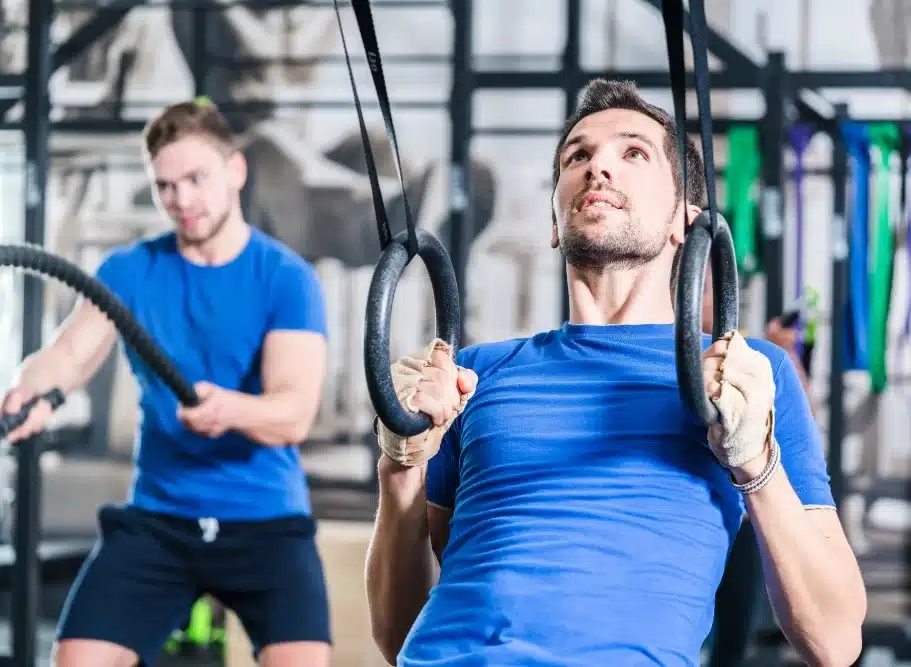
Ceiling rigs, suspension trainers, gymnastic rings, and wall anchors are subject to wear and tear with repeated use. That wear is not visible until a failure happens. Monthly inspections that record the condition of every anchor point and cable connection provide facilities with an early warning system before a serious failure occurs. Keep a written record of these inspections, including the date and the name of the person conducting the inspection.
Manufacturers usually publish weight limits and inspection plans for rigging gear. Follow these closely to lower your risk. Many rigging claims trace back to a skipped inspection.
HVAC Air Turnover, Humidity Control & Mold Prevention
Hard training in fitness facilities creates a lot of humidity and dust from sweat, chalk, and heavy breathing. HVAC systems need enough airflow and filtering to manage this. Depending on the facility and HVAC system, higher-efficiency filtration may help improve air quality and reduce airborne dust. This reduces breathing irritation and slip hazards from condensation. The lack of humidity control also allows mold to grow, especially in locker rooms and showers.
Pay special attention to chalk dust control in strength-dominated facilities. Heavy dust build-up affects air quality and equipment life. Instead of a generic commercial building plan, develop HVAC maintenance plans around these fitness-specific conditions
Equipment Sanitation Protocols & MRSA Infection Control
Mats, kettlebells, benches, and other shared gear may spread staph and MRSA from person to person if not cleaned regularly. The Centers for Disease Control and Prevention has released guidelines on preventing the spread of MRSA in shared gym spaces. Clean high-touch equipment on a regular schedule. This minimizes your liability and health risk should there be an outbreak.
Documented cleaning logs have two functions. They protect members’ health and create a paper trail to demonstrate reasonable care should health-related claims be made. Treat sanitation logging the same way you’d treat safety equipment checks.