Last Updated: 9-24-2026
Does Insurance Cover Pilates Reformers and Studio Equipment?
Quick answer: Yes, if you have commercial property insurance. It pays to repair or replace reformers, Cadillacs, chairs, barrels, mats, and electronics damaged or stolen in a fire, break-in, burst pipe, or storm. It does not cover worn springs, frayed straps, or other wear and tear, and general liability does not cover your equipment at all.
- Covered: reformers, towers, Cadillacs, chairs, barrels, props, electronics, and build-out like mirrors and flooring, even if you rent.
- Add-ons to ask for: business interruption, equipment breakdown (for HVAC and hot Pilates heaters), and off-site coverage if you teach outside the studio.
- Not covered: wear and tear, flood, earthquake, and equipment taken off-site without an add-on.
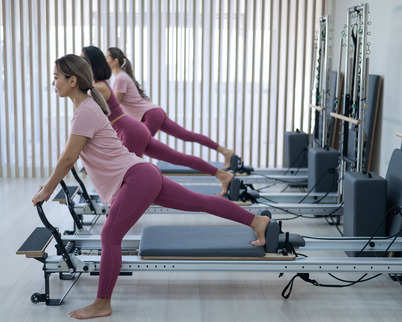
Reformers, Cadillacs, chairs, and barrels are the backbone of a Pilates studio, and a single commercial reformer can cost thousands of dollars to replace. This guide covers exactly how property insurance protects that equipment, where the gaps are, and how to file a claim. See all of NEXO’s Pilates studio insurance options.
Also Read: Top 8 Reasons to Have Pilates Studio Insurance
What Pilates Equipment Does Property Insurance Cover?
| Equipment | Covered for | Not covered for |
|---|---|---|
| Reformers & towers | Theft, fire, water damage from burst pipes, vandalism, storm damage | Worn springs, frayed straps or ropes, cracked frames from age |
| Cadillacs, chairs & barrels | Theft, fire, water damage, vandalism | Normal wear, upholstery wear, loose hardware |
| Mats, rings, balls & bands | Theft or loss in a covered event like a fire | Everyday wear — budget these as supplies |
| Sound systems, computers & check-in tablets | Theft, fire, water damage, power surge (with breakdown add-on) | Data loss or hacking (needs cyber coverage) |
| Mirrors, flooring & build-out | Damage from a covered event, even in a rented space | Scuffs, wear, and the landlord’s building structure |
| Heaters & HVAC (hot Pilates) | Sudden electrical or mechanical failure, with the breakdown add-on | Failure from lack of maintenance or old age |
For broader coverage questions that apply to any gym or studio, see property insurance for gym and studio equipment.
Why Property Insurance Matters for Pilates Studios
Without your equipment, you can’t run classes. Pilates gear faces a few main risks:
- Theft: reformers and electronics are expensive and can attract thieves.
- Damage: fire, burst pipes, storms, and accidents can ruin equipment.
- Vandalism: a break-in can leave frames, upholstery, and mirrors destroyed.
- Wear and tear: not covered by insurance — plan for it in your maintenance budget.
Without coverage, replacing a room of reformers after a single fire or break-in could close your studio for weeks, or for good.
Types of Pilates Studio Property Insurance Coverage
1. Contents Coverage
The most important coverage for a Pilates studio. It pays to repair or replace your reformers, Cadillacs, chairs, mats, furniture, and electronics if they’re stolen, damaged, or destroyed in a covered event.
2. Building Coverage
If you own your building, this covers the structure from fire, storms, or vandalism. If you lease, your landlord usually insures the building, but check your lease to be sure.
3. Business Interruption Insurance
If a fire or storm forces you to close, business interruption replaces lost income and pays ongoing costs like rent and wages while you rebuild.
4. Equipment Breakdown Insurance
Covers sudden electrical or mechanical failure of systems like HVAC units, infrared heaters for hot Pilates, sound systems, and computers. It does not cover a reformer spring or strap that wears out from use — that’s normal wear and tear.
5. Flood Insurance
Standard property policies usually exclude flooding. If your studio is in a flood-prone area, you’ll need a separate flood policy. Water from a burst pipe inside the building is typically covered by your regular policy.
6. Off-Site and Mobile Equipment
If you teach private sessions in clients’ homes, run outdoor classes, or bring reformers or props to events, that equipment usually isn’t covered away from your studio. Ask for inland marine or equipment floater coverage.
Also Read: Protecting Your Pilates Studio: Key Insurance Tips
Replacement Cost vs. Actual Cash Value
This choice decides how much you get paid after a loss.
- Replacement cost pays what it costs to buy the same reformer new today.
- Actual cash value subtracts depreciation. A seven-year-old reformer might pay out a fraction of what a new one costs.
Because Pilates equipment is expensive and depreciates, replacement cost is usually worth the higher premium. Ask your agent which your policy uses.
How Much Does Property Insurance Cost for a Pilates Studio?
Most small studios pay $500 to $2,000 a year for property insurance. Studios with a full room of reformers and apparatus may pay more, because your premium is based largely on what your equipment would cost to replace.
- Equipment value: the number of reformers and apparatus you own.
- Location: crime rates and storm or flood risk.
- Replacement cost vs. actual cash value: replacement cost costs more but pays more.
- Deductible and add-ons: a higher deductible lowers your premium; add-ons raise it.
How to Choose the Right Pilates Studio Property Insurance
1. Inventory Your Equipment
List every item with its value, purchase date, and condition — reformers, Cadillacs, stability chairs, arc barrels, mats, bands, weights, and electronics. This tells you how much coverage you need and speeds up any claim.
2. Consider the Risks in Your Area
If your studio is prone to flooding, earthquakes, or break-ins, you may need add-ons or higher limits.
3. Understand Your Lease
Your landlord’s insurance usually covers the building, not your equipment or build-out. You need your own policy for those.
4. Check Financing or Lease Terms on Your Reformers
If you financed or lease your reformers, the lender or leasing company may require property insurance and ask to be listed on the policy.
5. Balance Cost and Coverage
The cheapest policy can leave you paying out of pocket to replace expensive apparatus. Compare limits, deductibles, and exclusions, not just price.
Filing a Claim for Damaged or Stolen Pilates Equipment
- Document the damage: photograph everything and list each affected item. For theft, file a police report and save any security footage.
- Contact your insurer right away: they’ll tell you what documents they need. NEXO clients can start at our claims center.
- Submit your claim: include your equipment inventory, receipts, or proof of ownership. Keep copies of everything.
- Work with the adjuster: show them the damaged items and discuss replacement values.
- Receive payment: based on replacement cost or actual cash value, depending on your policy.
Note: if a snapped spring or broken strap injures a client, that’s a liability claim, not a property claim. It falls under general liability or professional liability.
Maintaining Your Pilates Equipment to Prevent Claims
1. Inspect Equipment Regularly
Check for frayed ropes and straps, worn springs, and cracks in wood or aluminum frames. Keep a written inspection log — it helps with both property claims and injury claims.
2. Replace Springs on Schedule
Follow the manufacturer’s spring replacement schedule. Worn springs aren’t covered by insurance and are a common cause of client injuries.
3. Clean and Lubricate Equipment
Follow the manufacturer’s recommendations for cleaning and maintaining each piece of equipment.
4. Train Staff on Proper Use and Storage
Train instructors to use, adjust, and store equipment correctly. Roll mats and store them dry, and hang bands to prevent fraying.
Also Read: Why Pilates Studios Need Comprehensive Insurance
Pilates Studio Property Insurance: FAQ
Does insurance cover Pilates reformers?
Yes, with commercial property insurance. It pays to repair or replace reformers damaged or stolen in a covered event like a fire, break-in, or burst pipe.
Are worn reformer springs covered by insurance?
No. Springs, straps, and ropes that wear out from normal use are wear and tear, which property insurance doesn’t cover. Replace them on the manufacturer’s schedule.
Does my landlord’s insurance cover my Pilates equipment?
No. Your landlord’s policy covers the building. Your reformers, apparatus, and any build-out you paid for need your own property policy.
Is my equipment covered if I teach Pilates in clients’ homes?
Usually not. Property insurance covers equipment at your studio. For reformers or props you take to clients’ homes or events, you need inland marine or equipment floater coverage.
How much is property insurance for a Pilates studio?
Most small studios pay $500 to $2,000 a year. Studios with more reformers and apparatus may pay more, since the premium is based on replacement value.
Does general liability cover my Pilates equipment?
No. General liability covers injuries and damage to other people. To cover your own equipment, you need property insurance.
Conclusion
Your reformers and apparatus are the most expensive part of your Pilates studio. The right property insurance — with replacement cost, the add-ons you need, and a current equipment inventory — means a fire, flood, or break-in doesn’t have to shut you down. Contact NEXO today to protect your Pilates studio equipment.
Reviewed by NEXO Insurance Services — a licensed California insurance agency (CA Agency License OE14627) specializing in fitness and wellness businesses since 2005. 111 N. Sepulveda Blvd., Suite 325, Manhattan Beach, CA 90266 · 310-937-2007.
Last updated: September 24, 2026. This page is general information. Coverage depends on your policy — talk to a NEXO agent about your studio.