Last Updated: August 16, 2026
Do barbers and barbershops need liability insurance?
Yes. Most barbers and barbershop owners need professional liability insurance (covering razor nicks, allergic reactions, and service-related claims) and general liability insurance (covering slip-and-fall accidents and property damage). Coverage needs differ by business model — a shop owner, an independent suite renter, and a mobile barber each carry different exposure. NEXO Insurance Services matches coverage to how each barber or shop actually operates.
How Much Does Barbershop Insurance Cost?
Barbershop and barber insurance is priced mainly by business model (shop owner vs. independent vs. mobile), the services offered (standard cuts vs. razor shaves and chemical services), number of chairs or employees, and the coverage limits you choose. Razor and chemical services typically carry more exposure than haircuts alone.
| Coverage | What it protects against | Who needs it |
|---|---|---|
| Professional liability | Razor nicks, allergic reactions, and service-related claims | All barbers performing hands-on services |
| General liability | Slip-and-fall accidents and property damage in the shop | Shop owners and anyone with a physical location |
| Workers’ compensation | Employee injuries on the job | Shop owners with employees |
| Independent / portable coverage | Coverage that follows a barber across chairs or suites | Suite renters and independent contractors |
| Mobile barber coverage | Sessions at homes, events, or locations outside a fixed shop | Mobile and on-location barbers |
What insurance does a barbershop need?
A barbershop typically needs general liability for the physical space (slip-and-fall in the waiting area, equipment incidents) and professional liability for service-related claims (razor nicks, product reactions, dissatisfied-client disputes). Shop owners with employees or chair renters should also confirm workers’ compensation and whether independent contractors are covered under the shop’s policy — often they are not.
The barber industry in the United States has undergone a radical transformation over the last decade. What was once a straightforward trip for a quick trim has evolved into a sophisticated grooming experience that sits at the intersection of traditional craft and modern hospitality.
Today, a barber is often part stylist, part confidant, and part business operator. As the industry grows rapidly, the expectations placed upon shop owners and independent barbers have shifted.
In 2026 and beyond, it is no longer enough to be proficient with a pair of clippers. Success as a barbershop owner now requires a deep understanding of operational safety, client psychology, and solid business risk management.
Clients today enter a barbershop expecting more than a cut, a trim, or a fade. They are looking for consistency, high standards of hygiene, and a level of professionalism that justifies the premium prices many modern shops now command. And lastly but most importantly, they are expecting a bona fide experience.
For the professional barber, this means that their work behind the chair is only half the battle. The other half includes managing a service menu, maintaining a safe environment, and building a sustainable business model. This guide offers a comprehensive look at how modern services and shop operations must work in tandem to create a thriving, profitable barbershop business.
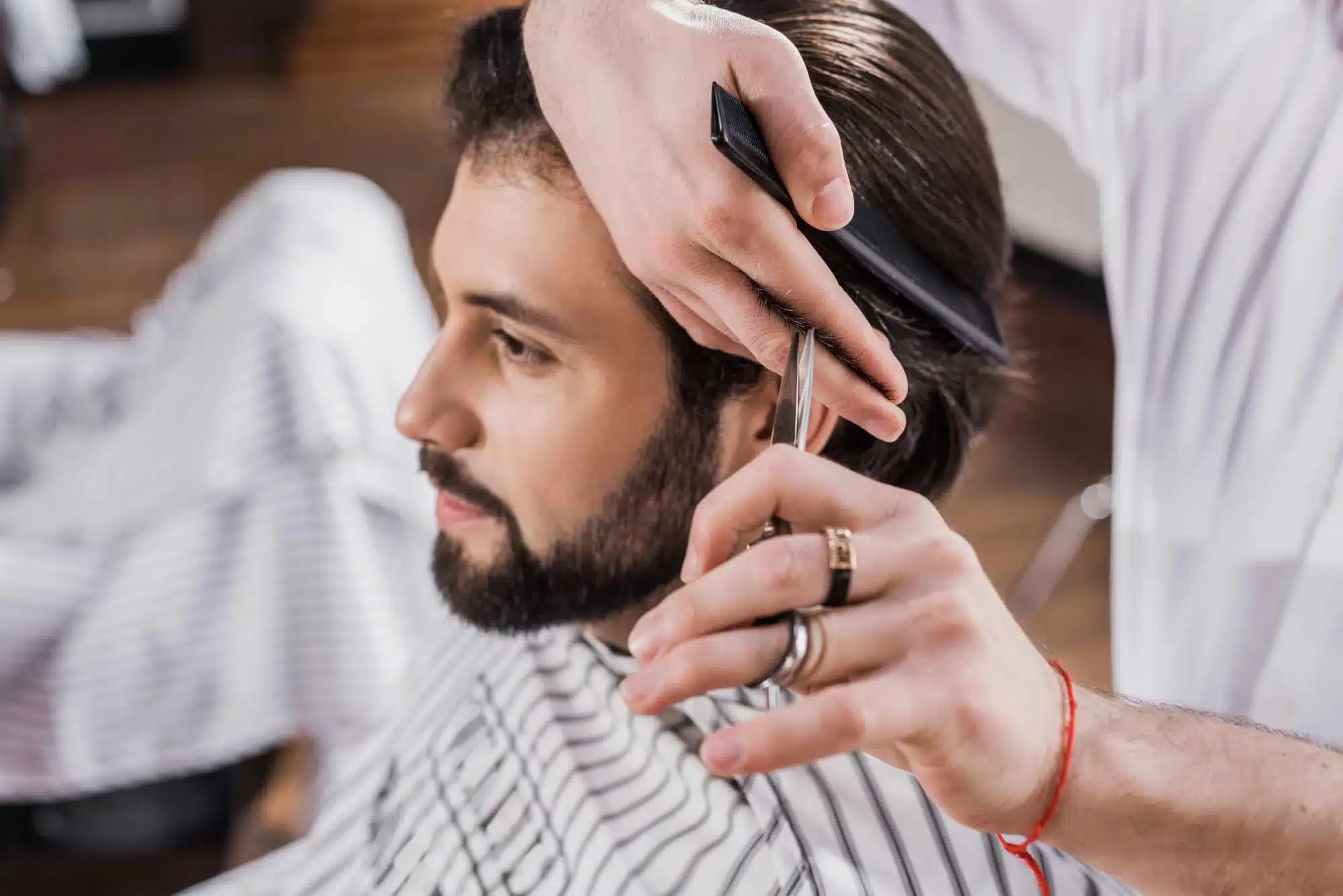
Clients today enter a barbershop expecting more than a cut, a trim, or a fade. They are looking for consistency, high standards of hygiene, and a level of professionalism that justifies the premium prices many modern shops now command. And lastly but most importantly, they are expecting a bona fide experience.
For the professional barber, this means that their work behind the chair is only half the battle. The other half includes managing a service menu, maintaining a safe environment, and building a sustainable business model. This guide offers a comprehensive look at how modern services and shop operations must work in tandem to create a thriving, profitable barbershop business.
Core Haircut Services and What Clients Expect
The haircut remains the primary revenue driver for any barbershop. However, the standard for what constitutes a “good" haircut has risen across the culture. With the prevalence of high-definition social media portfolios, clients often arrive with specific, high-level expectations for technical precision.
Specialty Cuts and Custom Styling
As barbers move into specialty work, i.e., intricate hair designs, long-hair styling, or corrective cuts, the service becomes highly personalized. These services often command higher prices but require more time and greater communication.
Thus, managing expectations is paramount with these higher-end services. If a client’s hair texture won’t support a specific look they saw online, the barber has a professional obligation to explain why and offer a viable alternative. This level of honesty protects the barber’s reputation and prevents the client from feeling let down by the final result.
Kids and Family Haircuts
Providing barber services for children requires a different operational approach. Safety is always the primary concern, as younger clients may move quickly and unexpectedly. Barbers must therefore adjust their technique and tool handling to account for this unpredictability.
From a business perspective, many shops find that family haircuts are a great way to build long-term loyalty, but they must be scheduled appropriately. Rushing a child’s haircut to stay on time for a premium adult service can lead to accidents or a poor experience for the family.
Standard Haircuts: Fades, Tapers, and Classic Cuts
Precision and consistency are the hallmarks of a professional barber. Whether a client asks for a high skin fade, a conservative taper, or a classic scissor cut, they expect the result to be identical to their last visit or better.
Consistency is what builds trust in this business. To achieve a high level of consistency, many successful shops implement internal style guides or standard operating procedures for common cuts to verify that every barber in the shop maintains a similar baseline of quality. This helps keep the experience and the result more uniform over time, no matter which professional is doing the work.
The consultation is the most critical part of the service because a barber must be able to translate vague client descriptions into technical execution. Asking questions about hair growth patterns, previous bad experiences, and daily styling habits can help prevent misunderstandings. A successful consultation mitigates the risk of a dissatisfied client and sets a professional tone for the rest of the appointment.
Grooming Services Beyond Haircuts
Expanding a barbershop’s service menu beyond haircuts is a proven way to increase the average ticket price and maximize the revenue generated per chair. That said, these additional services introduce new products, tools, and physical risks that must be accounted for.

Beard Trimming and Shaping
Artisan beard care has become a staple in modern shops as beards have grown more popular across Western cultures. This service goes far beyond simply shortening the hair to include creating symmetry, defining the neckline, and advising on home maintenance with top-of-the-line products.
Because beard hair is often coarser and the skin underneath can be sensitive, barbers must be well-versed in skin prep. This includes using pre-shave oils or specially formulated beard conditioners to soften the hair, which helps avoid tugging and skin irritation. These popular beard products are also a great addition to a barbershop’s retail section.
Hot Towel Shaves and Razor Services
The straight razor shave is perhaps the most iconic barber service, yet it carries the highest level of physical risk. Technique and sanitation are non-negotiable. Barbers must maintain a steady hand and a deep understanding of facial anatomy to prevent nicks and cuts. Furthermore, the use of steam and hot towels requires careful temperature control to avoid burns.
From an operational standpoint, razor services require a strict adherence to OSHA’s bloodborne pathogen protocols. Every shop must have a clear plan for handling accidental nicks, including the use of styptic powder and proper disposal of used blades in a sharps container. Failure to follow these steps can lead to health department violations and significant liability.
Facial Grooming and Skin Care Add-Ons
Many shops are finding success with additional revenue streams by adding mini-facials, blackhead removal, or eyebrow grooming to their menus. These spa-like services cater to the growing demand among men for more comprehensive grooming.
However, these add-ons involve more direct contact with the client’s skin and the use of chemical products that can potentially irritate. Barbers should always check for allergies or skin sensitivities before applying new products and, if necessary, receive some type of education or certification. Additionally, keeping a clean, organized workstation for these services helps maintain a professional image and prevents cross-contamination.
When Services Expand Beyond Basic Barbering
Growth is the goal for most shop owners, but expansion always introduces complexity. When a shop moves from exclusively offering haircuts to a full menu of grooming and skin treatments, the business inevitably changes. Barbershop owners with a business that is scaling are no longer just managing a schedule but a diverse inventory of products, more specialized equipment, and a higher level of physical risk.
As aforementioned, with facials, new techniques or services often require additional training and certification. It is a potentially costly mistake to assume that a barber who is great with clippers is automatically prepared to perform chemical hair coloring or advanced skin treatments. Operational safety must remain ahead of service expansion. This means updating your shop’s safety protocols every time a new service is added. It also means recognizing that as expectations rise, so does the potential for client disputes if a high-end service does not go as planned.
What Clients Often Notice and Remember
In a service-based business like a barbershop, the small details often carry the most weight. A client might not be able to articulate why a fade is technically perfect, but they will certainly notice if the cape smells like mildew or if the barber was distracted by their phone. These small details add up to an overall experience that will either keep customers coming back or turn them off and send them elsewhere. Here is what they remember most:
Consistency Between Visits
Clients want to know they are in good hands every time they sit in the chair. Inconsistent results or inconsistent experiences are the fastest way to lose a loyal customer.
Cleanliness and Hygiene
A messy station suggests a messy technique. Keeping professional tools organized and surfaces wiped down is a basic requirement of barbershop hygiene.
Communication
Being able to explain the “why” behind a technique or product recommendation builds authority. In fact, the barbershop’s cultural importance was built chiefly on communication.
Attention to Detail
Noticing small things, like stray hairs on the neck or well-trimmed eyebrows, shows the client that you are fully invested in their grooming.
Barbershop Operations That Impact Client Experience
Operational efficiency is the invisible part of a barbershop that makes or breaks the business. A shop can have the most talented barbers in the city, but if the operations are chaotic, the business will struggle to retain clients.
Scheduling and Time Management
The transition from walk-in shops to appointment-based models has helped many modern barbers stabilize their income. However, this requires disciplined time management. Overbooking or running behind schedule creates a stressful environment for both the barber and the client. Rushed services are where mistakes happen, whether it’s a poor haircut or a physical nick with a razor. Maintaining a realistic buffer between appointments and utilizing a scheduling app or software helps keep the day running smoothly.
Shop Environment and Cleanliness
First impressions are formed the moment a client walks through the door. The smell of the shop, the volume of the music, and the cleanliness of the waiting area all contribute to the brand. A shop that looks and feels modern and professional can justify higher prices. Regular deep-cleaning schedules for floors, chairs, and bathrooms should be a standard part of shop operations to maintain a hygienic, high-end environment.
Customer Service and Retention
As is true in any industry, attracting new clients is expensive, but keeping existing ones is profitable. A robust customer service strategy involves more than just being “nice.” It includes a clear system for handling complaints, a professional approach to managing cancellations, and a method for following up with clients. Repeat clients provide the predictable revenue that allows a shop to grow and invest in better equipment, training, and staff.
Hygiene, Safety, and Professional Standards
Hygiene is not just a legal requirement but a core component of the barbering craft. In the post-pandemic world, clients are more aware of sanitation than ever before.

Tool Sanitation and Maintenance
Clippers, guards, combs, and shears must be disinfected between every single client. Using spray disinfectants or immersion jars like Barbicide is mandatory. Beyond sanitation, tools must be well-maintained. Dull blades pull hair and cause skin irritation, while poorly calibrated clippers can leave uneven lines. A barber who takes great care of their tools is a barber who takes exceptional care of their clients.
Skin Safety and Infection Prevention
Barbers work with sharp objects near the face and neck, areas prone to infection if proper care isn’t taken. Preventing barber’s itch, also known as folliculitis, or the spread of fungal infections, requires a clean environment and the use of fresh neck strips for every client. If a barber notices a client has an active skin infection or an open sore, they must have the professional confidence to decline the service and recommend that the client see a medical professional. This protects the shop and the other clients.
Licensing and Compliance
Every barber and shop owner must stay current with state board regulations. These rules exist to protect the public and the practitioner. Displaying licenses prominently is not just a legal requirement but also a verifiable sign to your clients that you are a qualified professional who respects industry standards.
Business Practices Barbers Often Overlook
Many barbers enter the industry because they love the craft, not because they love spreadsheets. However, treating a shop as a hobby rather than a business is a recipe for long-term failure. Here are the top four business practices barbershops commonly overlook:
Informal Operations
Relying on verbal agreements or handshake deals for chair rentals or employee expectations often leads to conflict. Written contracts and clear shop rules are essential. For modern barbershops, this should also include a style guide to help maintain consistency across all the professionals.
Lack of Clear Policies
What happens if a client is 20 minutes late? What is your refund policy? Having these answers written down saves time and prevents arguments. Modern barbershops need to codify their policies and make them easily accessible for both clients and staff.
Inconsistent Service Standards
If three different barbers in the same shop offer three different levels of service for the same price, the shop’s brand suffers. Again, pricing information like this should be codified in policies or operational handbooks to prevent confusion.
Not Planning for Growth
It’s typical for many barbers to work in their business but never “on” their business. Setting aside time to look at financial goals, marketing strategies, and equipment upgrades is what separates a job from a career.
Understanding Risk in Barber Services
Every time a barber picks up a tool, there is an inherent risk. Acknowledging these risks is the first step toward mitigating them.
Cuts and Skin Reactions
Even the most experienced barber can have a slip of the hand. Furthermore, clients can have unexpected allergic reactions to dyes, sprays, or aftershaves.
Client Dissatisfaction
In the age of online reviews, one unhappy client can cause significant damage to a shop’s reputation. Having a professional dispute resolution process is vital.
Equipment-Related Incidents
A malfunctioning chair or a tripped cord can lead to physical injuries. Regular equipment inspections are a necessary part of shop safety.
Independent vs. Shop Liability
If you are a suite renter or an independent contractor, you are your own business entity. You cannot rely on a shop owner’s policies to protect your personal assets if something goes wrong during your service.
How to Structure a Barbershop for Long-Term Growth
Whether you are a solo practitioner or a shop owner with ten chairs, structure is the key to scaling. Here’s what to keep in mind when growing and scaling a barbershop business in 2026 and beyond:
Independent Barber vs. Shop Owner
Independent barbers have more freedom but also more administrative burden. They must handle their own taxes, marketing, and supply procurement. Shop owners, on the other hand, must focus on leadership, staff retention, and facility management. Understanding which role fits your personality and goals is the first step toward a successful career path.
Building a Service Menu That Scales
A common mistake is making a service menu too complicated. A menu should be easy for a client to understand and easy for a barber to execute consistently. If a service takes too long or requires too many expensive products for the price you’re charging, it might be dragging down your profitability.
Creating a Consistent Client Experience
Systems should replace improvisation. From the way the phone is answered to the way the client is draped, every step should follow a repeatable system. This allows a shop owner to step away from the daily operations without the quality of the service falling apart.
When It’s Time to Formalize Your Business Practices
There comes a point in every barber’s career where winging it no longer works. Usually, this happens when:
Client volume increases to the point where you are consistently booked out weeks in advance.
You begin offering high-risk or high-priced services, such as chemical straightening or advanced razor work.
You move from a shared shop environment into your own private suite or storefront.
You begin hiring other barbers or administrative staff.
At this stage, growth requires structure. This includes formalizing your accounting, investing in professional booking software, and taking a hard look at your liability exposure. A professional barbershop business doesn’t just happen organically; it is built through deliberate choices and a commitment to high standards.
How Insurance Fits Into Barber Business Operations
In the world of professional grooming, insurance is a foundational business tool. It can often be viewed as a just-in-case expense, but in reality, comprehensive insurance coverage is a vital layer of protection that allows a barber to work with confidence.
Barbershop Liability Scenarios
These examples illustrate situations a barber or barbershop could encounter. Whether a claim is covered depends on the specific policy, facts, exclusions, limits, and applicable coverage.
Razor Nick During a Shave
Scenario: A barber nicks a client during a straight-razor shave, and the client requires medical attention.
Coverage to review: Professional liability may respond to service-related injury claims, subject to policy terms.
How NEXO helps: NEXO writes coverage for barbers offering razor and hot-towel services, where risk is highest.
Product Allergic Reaction
Scenario: A client has an allergic reaction to a new beard oil or chemical treatment.
Coverage to review: Professional liability may respond to product-related reaction claims, subject to policy terms.
How NEXO helps: NEXO helps barbers confirm newer service lines, like facials or chemical treatments, are reflected in coverage.
Waiting Room Slip-and-Fall
Scenario: A client slips on a wet floor near the shampoo station and is injured. Coverage to review: General liability may respond to premises-related accidents, subject to policy terms.
How NEXO helps: NEXO writes general liability with real shop conditions — shampoo bowls, capes, foot traffic — in mind.
Suite Renter Coverage Gap
Scenario: An independent barber renting a chair assumes the shop’s policy covers them, and it doesn’t.
Coverage to review: A personal/portable policy may respond where a shop’s coverage excludes independent contractors.
How NEXO helps: NEXO aligns coverage to suite renters and independent barbers whose protection needs to follow them.
Equipment Malfunction
Scenario: A chair malfunctions or a cord creates a trip hazard, injuring a client or barber.
Coverage to review: General liability may respond to equipment-related incidents, subject to policy terms.
How NEXO helps: NEXO helps shop owners confirm equipment and facility risks are addressed, not just service-related claims.
New Service Added Without Updating Coverage
Scenario: A barber adds chemical hair coloring or advanced skin treatments without reviewing their policy.
Coverage to review: Services not reflected on a policy may not be covered — additions need to be confirmed before they’re offered.
How NEXO helps: NEXO reviews coverage whenever a barber expands services so growth doesn’t create a silent gap.
Protection Against Service-Related Incidents
No matter how careful you are, accidents happen. A slip with a straight razor or an allergic reaction to a new beard oil can lead to a claim. Professional liability insurance is designed to handle the costs associated with these types of incidents. Without it, a single mistake could result in a financial burden that ends a career.
Coverage for Different Business Models
The needs of a shop owner are different from those of a mobile barber or a suite renter. A shop owner needs coverage for the physical space, including slip-and-fall accidents in the waiting room. An independent barber needs coverage that follows them, ensuring they are protected regardless of which chair they are working in.
Supporting Long-Term Stability
Insurance provides the peace of mind needed to take risks and grow. Knowing that your business is protected against lawsuits or equipment damage allows you to focus on what you do best: providing excellent service to your clients. It is a mark of a professional who takes their business and their clients’ safety seriously.
Protecting and Growing Your Barbershop Business
Barbering is a unique blend of artistry, social connection, and technical skill. To thrive in the modern landscape, barbers and shop owners must recognize that they are running a professional business that requires as much attention to operations as to the craft. Success is built on a foundation of consistency, hygiene, and clear communication.
As you expand your services and grow your client list, the complexity of your operations will naturally increase. By focusing on safety, understanding your risks, and implementing professional business practices, you can create a shop environment that is both profitable and respected. True success in this industry isn’t just about the cut you give today; it’s about the business structure you build to support your work for years to come. Thinking beyond the day-to-day work is what allows a talented barber to become a successful business owner.
Barber & Barbershop Insurance FAQs
Do barbers need liability insurance?
Yes. Barbering involves sharp tools, chemical products, and close physical contact, so most barbers carry professional liability for service-related claims and general liability for accidents in the shop.
What insurance does a barbershop need?
Most barbershops need general liability for the physical space, professional liability for service-related claims, and workers’ compensation if the shop has employees. Independent contractors typically need their own separate coverage.
Are independent barbers covered under the shop’s insurance?
Often, no. Many shop policies protect the business and its employees but exclude suite renters and independent contractors — independent barbers typically need their own portable policy.
Does insurance cover razor cuts and nicks during a shave?
Professional liability may respond to injury claims from razor and hot-towel services, which carry more risk than standard haircuts — confirm your policy explicitly covers these services.
What happens if a client has an allergic reaction to a product?
Professional liability may respond to claims involving product reactions from dyes, sprays, or aftershaves — checking for allergies beforehand and documenting it helps support any resulting claim.
How much does barbershop insurance cost?
Cost depends on your business model (shop owner, independent, or mobile), the services you offer, number of chairs or employees, and coverage limits — razor and chemical services typically cost more to insure than haircuts alone.
Do mobile barbers need different coverage?
Yes. Mobile barbers work in locations they can’t control — homes, events, offices — so their policy needs to explicitly extend beyond a single fixed shop address.
Does insurance cover slip-and-fall accidents in a barbershop?
General liability typically covers slip-and-fall and other premises-related accidents in the waiting area, shampoo station, and general shop space.
Do I need workers’ compensation if I have barbers renting chairs?
It depends on classification. Chair renters are usually independent contractors, not employees, but misclassification is a common source of disputes — confirm how your barbers are classified before assuming coverage doesn’t apply.
Does insurance cover chemical services like hair coloring?
Not automatically. Chemical and advanced skin treatments carry different risk than standard cuts, so newer service lines should be explicitly confirmed on your policy before you offer them.
What insurance do I need to open a barbershop?
At a minimum, general liability and professional liability. Most landlords also require proof of general liability before signing a commercial lease, and workers’ compensation is typically required once you hire staff.
Can one policy cover multiple barbers in a shop?
Often, yes for employees under a shop policy, but independent contractors and suite renters usually need their own individual coverage rather than relying on the shop’s policy.
Does insurance cover equipment damage or malfunction?
General liability and property coverage may respond to equipment-related incidents like a malfunctioning chair, but confirm your policy addresses both the equipment itself and any resulting client injury.
What’s the difference between general liability and professional liability for barbers?
General liability covers physical accidents in the shop space, like a slip-and-fall. Professional liability covers claims tied to the service itself — a razor nick, a product reaction, or a dissatisfied client. Most barbers need both.
How often should barbershops review their insurance coverage?
Any time your services, staffing, or location changes — adding chemical services, hiring employees, adding chairs, or expanding to a new location can all create gaps in existing coverage.
At NEXO, we understand the specific challenges that barbers and shop owners face every day, making us a knowledgeable partner by your side. Whether you are just starting out or looking to protect a multi-chair operation, having the right support and structure in place allows you to grow with confidence.
If you’re building or expanding your barber business, having the right structure in place makes a difference. NEXO helps barbers and shop owners protect what they’ve built while continuing to grow with confidence. Connect with our team today to learn more about our customized insurance plans.
NEXO Insurance Services has specialized in fitness and wellness-adjacent business insurance for more than 15 years as a licensed California broker (CA Broker/Agent License OG51267; CA Agency License OE14627), helping barbers and shop owners match coverage to their business model — whether that’s a multi-chair shop, a suite rental, or a mobile operation.
Reviewed for Insurance AccuracyThis content is published and reviewed by NEXO Insurance Services to help barbers, shop owners, and independent professionals better understand insurance, liability, and risk-management considerations.
Reviewed by: NEXO Insurance ServicesCalifornia Broker/Agent License: OG51267California Agency License: OE14627
Last Reviewed: August 14, 2026
Information provided on this page is for general educational purposes and is not legal, financial, or individualized insurance advice. Availability, eligibility, coverage, limits, conditions, and exclusions vary by policy, carrier, state, and circumstances. Review the applicable policy documents or speak with a licensed insurance professional regarding your specific needs.