How Animal-Assisted Therapy Works: Programs, Training, and Risks
Last Updated August 25-2026
How does animal-assisted therapy work?
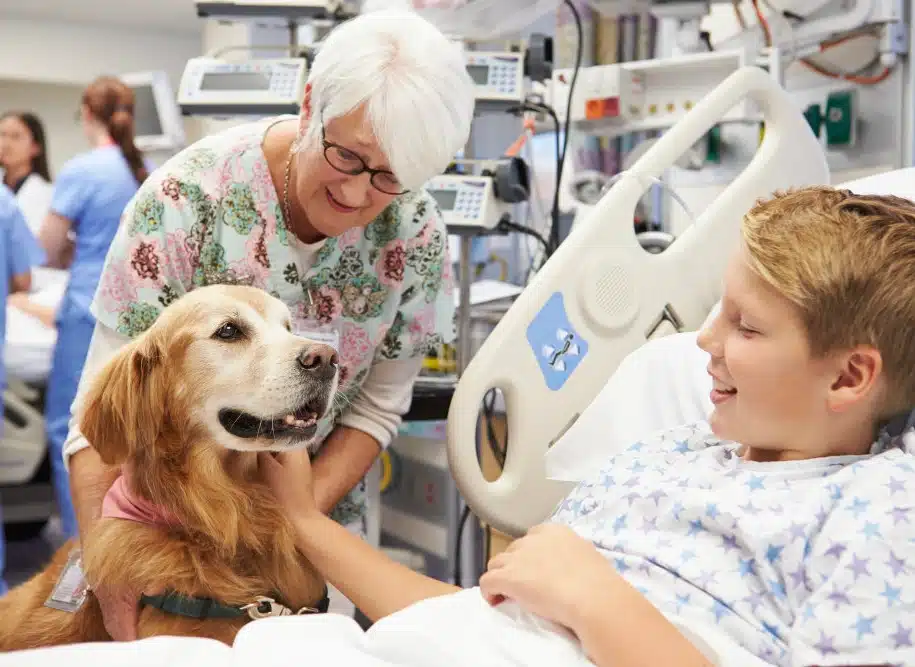
Animal-assisted therapy pairs a trained animal and its handler with a licensed professional — a counselor, occupational therapist, or physical therapist — who leads structured activities toward a specific treatment goal. The animal supports the therapy; it does not replace the professional’s clinical judgment. Programs typically require animal training and evaluation, clear handler and provider roles, facility safety rules, and liability coverage before sessions begin. NEXO Insurance Services works with hospitals, schools, and community organizations to match coverage to how each program actually operates.
What’s the difference between animal-assisted therapy and an emotional support animal visit?
Animal-assisted therapy is a structured, goal-directed activity led by a licensed professional as part of a treatment plan — for example, a physical therapist using dog-walking to build a patient’s mobility. An emotional support or informal animal visit, like a volunteer bringing a dog to a senior living facility, can improve mood and provide companionship, but it isn’t tied to a clinical treatment goal or supervised by a licensed provider.
More organizations are using animal-assisted therapy in healthcare, schools, and community programs. Hospitals, counseling centers, schools, and rehab clinics are exploring how animals can support emotional health and recovery.
Animals can help make a space feel calm. Many people feel less stressed when they spend time with an animal. Therapy can seem easier and less intimidating. For example, a therapy dog might help a child feel at ease during counseling or encourage a patient in rehab to try simple movement exercises.
Successful animal-assisted therapy programs require careful planning. They rely on trained animals and licensed professionals. It’s also important to have clear roles, safety rules, and good documentation.
Program leaders need to decide how sessions will work. They should choose who will supervise the therapy, how animals will be trained, and how handlers and professionals will work together. Knowing how animal-assisted therapy works helps organizations create programs that are safe, organized, and long-lasting.
What Animal-Assisted Therapy Actually Means in Practice
People often use the term ‘animal-assisted therapy’ in a general way, but in professional settings, it has a more specific meaning.
Animal-assisted therapy involves people working with trained animals in a planned setting. These sessions have clear goals and are led by licensed professionals.
Professionals involved in therapy programs may include:
- counselors
- psychologists
- occupational therapists
- physical therapists
The animal helps people participate in therapy activities, but it does not replace professional treatment.
It’s important to distinguish between informal animal visits and structured therapy programs.
Informal visits often involve volunteers bringing animals into a facility. These visits can improve mood and provide companionship.
For example, a dog visiting residents in a senior living community may encourage conversation and social interaction. Residents may enjoy petting the dog or sharing stories about animals they had in the past.
These visits can improve emotional well-being, but they are not usually part of a clinical treatment plan.
Structured animal-assisted therapy programs are different. In these programs, activities with the animal are planned to support a therapy goal set by a licensed professional.
Examples include:
- A counselor may include a therapy dog during a session to help someone practice emotional regulation.
- A rehabilitation therapist may ask a patient to brush a therapy dog or walk it to encourage movement.
In these cases, the animal helps people take part in the therapy activity. The professional continues to lead the treatment and monitor progress.
Handlers also play an important role. They watch the animal closely and make sure it stays calm and comfortable during sessions.
This teamwork shows that animal-assisted therapy works best as a structured program rather than a casual animal visit.
Where Animal-Assisted Therapy Is Used Today
Today, animal-assisted therapy programs happen in many places. Each setting uses therapy animals to support different goals.
Mental health programs are among the most common settings for therapy animals. Therapists may include animals during counseling sessions to help reduce anxiety.
For some people, having an animal in the room makes therapy feel less formal and easier to talk. Animals can also help people practice coping skills and manage emotions.
Physical rehabilitation programs also use therapy animals. Patients recovering from injury or surgery may perform simple tasks with an animal.
These activities may include:
- brushing the animal
- guiding the animal on a short walk
- reaching or bending to interact with the animal
These tasks help people improve coordination, strength, and balance.
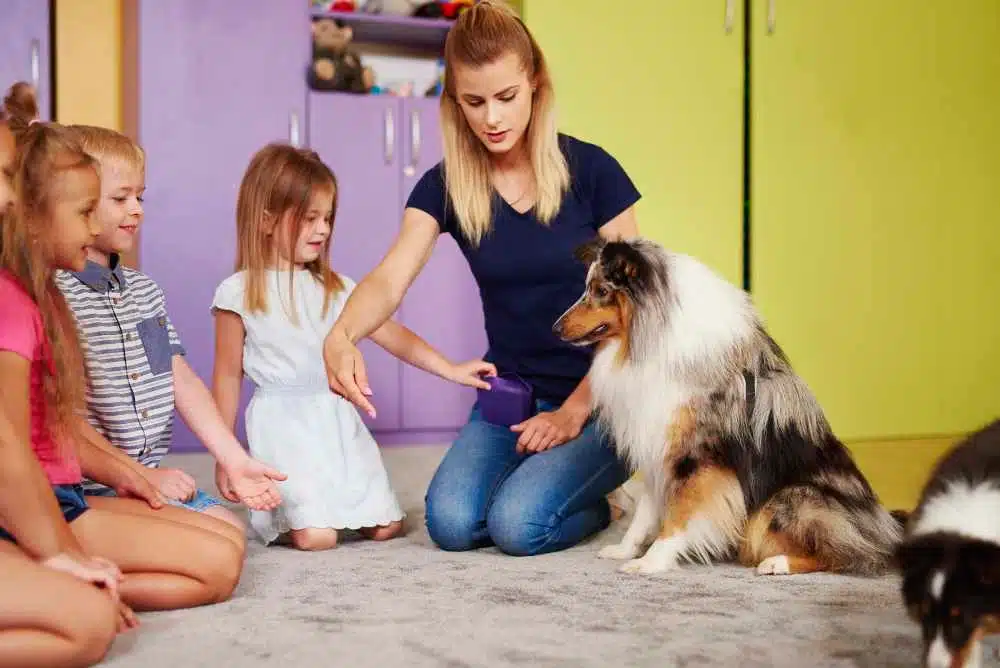
Schools sometimes include therapy animals in structured programs, especially in special education. Therapy dogs may help students stay calm during reading exercises or social skill activities.
For some students, animals make learning feel safer and more interesting. Students might read aloud to a therapy dog or practice social skills in a relaxed setting.
Senior living communities also welcome therapy animals during scheduled visits. Residents can spend time with animals during group programs or one-on-one sessions. These interactions can support emotional well-being and social connection.
Community organizations and nonprofits also run animal-assisted therapy programs. These programs may support:
- Children facing emotional challenges
- Veterans adjusting to civilian life
- People with disabilities
- Individuals dealing with stress or trauma
Each place has its own program needs.
Healthcare facilities may require infection control rules. Schools often require parental consent and added supervision. Community programs may rely on volunteers and flexible schedules.
Because of these differences, organizations need to adjust therapy program requirements for each setting.
How Animal-Assisted Therapy Programs Are Structured
Good animal-assisted therapy programs need clear organization. The animal is the most visible part, but careful planning for each session is what supports the therapy.
Session Structure
Therapy sessions are usually scheduled in advance. Licensed professionals decide how the animal will help reach therapy goals.
Activities may include:
- Guiding the animal through simple commands
- Brushing or grooming the animal
- Walking together
These activities help people improve coordination, build confidence, and practice communication.
Sessions are usually short and focused. This keeps participants interested and helps prevent the animal from getting stressed.
Role of the Handler
The handler guides the therapy animal during the session.
They know the animal’s training and behavior well.
Handlers pay close attention to the environment and work to keep the animal calm and comfortable.
If the animal gets stressed, the handler can pause the activity.
Handlers also talk with the licensed professional about how the animal is doing during the session.
Role of the Licensed Professional
Licensed professionals are responsible for the therapy part of the session. They make sure the activities support the participant’s treatment goals.
These professionals observe how participants interact with the animal and may adjust activities to meet each person’s needs.
Their supervision helps keep therapy sessions organized and appropriate for clinical needs.
When handlers and licensed professionals work together, animal-assisted therapy programs run smoothly as well-coordinated services.
What Goes Into Training Therapy Animals
Training is essential for animal-assisted therapy. Not every animal is right for this kind of work.
Temperament and Suitability
Temperament is one of the most important factors. Therapy animals need to stay calm and predictable in many situations.
Animals in therapy environments may encounter:
- Wheelchairs
- Medical equipment
- Unfamiliar people
- Busy environments
A good therapy animal needs to remain relaxed in these situations.
Some animals can get anxious or overstimulated in busy places. This is why temperament testing is an important part of training.
Obedience and Environmental Exposure
Training programs also teach obedience and help animals get used to different environments. Therapy animals need to listen to their handler’s commands, even when there are distractions.
Training programs often introduce animals gradually to environments similar to therapy settings, such as hospitals, schools, or community centers.
Exposure helps animals get used to new sounds and movements. This preparation makes sessions safer and more effective.
Certification and Evaluation
Many organizations use programs that offer therapy dog certification or check the animal’s behavior.
These programs often assess:
- Obedience skills
- Temperament
- Response to unfamiliar people
Certification shows that the animal meets basic behavior standards.
However, certification does not mean the animal will always behave perfectly. Many programs check the animal regularly to ensure it remains a good fit for therapy work.
Regular checks help keep the program safe and consistent.
Program Requirements Beyond the Animal
Good animal-assisted therapy programs need more than just trained animals. They also need clear rules to keep everyone safe.
Most programs follow basic steps such as:
- Facility rules that explain where animals can meet participants
- Screening to make sure people feel comfortable around animals
- Hygiene rules that protect both people and animals
- Consent forms and basic records
Facilities may also ask for vaccination records and proof that the therapy animal has been seen by a veterinarian. Handlers may need training on safety procedures and facility policies.
Keeping records is also important. Consent forms explain what participants can expect. Session notes help staff track who joined the program and how they are doing.
These steps show that therapy programs involve more than simply bringing in an animal. Clear rules help keep sessions safe, organized, and consistent.
What It Costs to Start and Maintain a Program
Starting an animal-assisted therapy program requires planning and budgeting.
Early costs often include:
- Training the therapy animal
- Certification and evaluation
- Creating program rules and policies
Organizations may also need to train staff and get the facility ready for therapy sessions. Some programs also buy simple equipment for activities.
| Cost category | Examples |
|---|---|
| Startup | Animal training, certification and evaluation, program policy development, staff training, basic equipment |
| Animal care (ongoing) | Vet visits, grooming, food, and general supplies |
| Staff time (ongoing) | Handlers, licensed providers, and program coordinators |
| Administrative (ongoing) | Scheduling, recordkeeping, and facility coordination |
| Insurance | Coverage matched to how the program operates — see the section below |
Once the program starts, new costs come up.
Animal care is a major part of the budget. Vet visits, grooming, food, and basic supplies help keep the animal healthy.
Staff time is also important. Handlers, therapists, and coordinators all help run the program.
Administrative work is another part of the program. Staff need to schedule sessions, keep records, and coordinate with the facility.
Some costs are easy to overlook. Scheduling between handlers and therapists can take extra time. Facilities may also require staff training before the program starts.
Programs also need regular review. Organizations must check that procedures work well and that therapy animals still fit the program.
These details show why planning is important when starting animal-assisted therapy programs.
Where Animal-Assisted Therapy Programs Run Into Challenges
Even with careful planning, animal-assisted therapy programs can face challenges. Many start with enthusiasm and good ideas, but once they begin, leaders often see the need for clear systems.
A common issue is inconsistent structure. If a program does not follow the same process each time, sessions can vary. One handler might lead activities one way, while another might do it differently.
When sessions are not consistent, it becomes harder to track therapy goals. This can also confuse staff and participants.
Another challenge involves unclear roles. In most sessions, two people guide the work:
- The handler who manages the animal
- The licensed provider who leads the therapy
The handler focuses on the animal’s behavior and comfort, while the provider works toward the participant’s therapy goals. If these roles are not clear, sessions may become disorganized.
Documentation can also be a challenge. Some programs focus mainly on animal interaction and may forget the importance of keeping proper records.
Common records include:
- Consent forms
- Session notes
- Safety procedures
- Incident reports
Without these records, it is harder to review sessions or resolve issues that arise.
Programs may also face challenges with expectations. Animal-assisted therapy can help people feel more comfortable and engaged, but animals do not replace clinical care. Licensed professionals are still in charge of guiding therapy.
By recognizing these challenges, organizations can strengthen and make their animal-assisted therapy programs more consistent. It also helps them better understand possible risks during therapy sessions.
Understanding Risk in Animal-Assisted Therapy Programs
Programs that bring animals and people together always have some risk. Understanding these risks helps organizations prepare and keep sessions safe.
Most therapy programs are safe. Trained animals and careful supervision reduce many risks, but unexpected situations can still happen.
Program-Level Risk Scenarios
These examples illustrate situations an animal-assisted therapy program could encounter. Whether a claim is covered depends on the specific policy, facts, exclusions, limits, and applicable coverage.
Hospital Infection Control Dispute
Scenario: A hospital’s infection control team raises concerns after a therapy animal visit, and the facility questions whether the program followed required protocols.
Coverage to review: General liability and program coverage may be relevant depending on how the incident is classified, subject to policy terms.
How NEXO helps: NEXO helps programs confirm their coverage reflects facility-specific requirements like infection control protocols.
Handler-Provider Coordination Gap
Scenario: During a session, the handler and the licensed provider disagree about whether the animal should continue, and the activity continues longer than it should have. Coverage to review: Professional liability may respond to claims tied to session decisions and supervision, subject to policy terms.
How NEXO helps: NEXO reinforces the value of documented, clear roles between handlers and providers as both a safety and coverage matter.
School Program Parental Complaint
Scenario: A parent objects after their child, who has an allergy or fear of dogs, was present during a classroom therapy animal session without prior notice.
Coverage to review: General liability may be relevant; consent and disclosure procedures are central to preventing and defending this type of claim.
How NEXO helps: NEXO reinforces the consent-form and disclosure practices that protect school-based programs specifically.
Multi-Facility Program Gap
Scenario: A program that started in one hospital expands to a second facility without updating its policy, and a facility later questions whether coverage applies there.
Coverage to review: Program coverage needs to reflect every facility a program actually operates in — it isn’t automatic.
How NEXO helps: NEXO reviews coverage whenever a program adds a new site so expansion doesn’t create a silent gap.
Certification Lapse
Scenario: A therapy animal’s certification lapses, and the program continues scheduling sessions before renewing it.
Coverage to review: Coverage and facility partnerships may depend on maintaining current certification — a lapse can affect both.
How NEXO helps: NEXO encourages programs to track certification renewal alongside their coverage renewal, not separately.
Animal Behavior Risk
Animals respond to what is happening around them. Even calm therapy animals might react to sudden noises or movements.
Handlers keep a close eye on the animal and look for signs of stress or discomfort.
If the animal seems uneasy, the handler can stop the activity.
Training helps reduce risk, but it cannot remove it completely.
Participant Interaction Risk
Participants react differently to animals. Some feel excited when they see a therapy animal, while others may feel nervous at first.
Sometimes, participants may move quickly or interact too roughly with the animal. These actions can affect how the animal responds.
Licensed providers guide these interactions to keep the session calm and organized.
Environmental Risk
The location of a session also affects safety. Animal-assisted therapy programs take place in many different settings:
- Hospitals
- Schools
- Counseling offices
- Rehabilitation clinics
- Community centers
Each setting is different. Hospitals may have medical equipment, schools may have large groups of children, and community programs may happen in busy public spaces.
Programs need to adjust their procedures to fit each setting.
Liability Between Parties
Responsibility during therapy sessions may involve several groups:
- The handler
- The licensed therapist or provider
- The facility hosting the session
These shared responsibilities are an important part of planning for liability in animal-assisted therapy.
Clear procedures help everyone know their roles when a problem arises.
By understanding these risks, programs can run more safely.
Why Insurance Is Part of Running a Responsible Program
Insurance is an important part of planning animal-assisted therapy programs. These programs involve animals, people, and staff working together. When animals and people work closely together, there is some risk. Insurance helps programs get ready for unexpected events.
For example, a person might lose their balance while walking with a therapy dog. Someone may also react suddenly during an interaction with the animal.
Even trained animals and careful handlers cannot prevent every situation. Facilities that host therapy programs must also manage risk. Hospitals, schools, and care centers often require proof of insurance before a program starts.
Because of this, insurance has become a standard part of program planning. Having insurance does not mean problems are expected. Most animal-assisted therapy programs run safely for many years. Coverage just helps if something unexpected happens.
Insurance works together with training, supervision, and clear rules. These things help therapy programs run safely.

What Coverage Should Reflect in Animal-Assisted Therapy
When organizations consider therapy animal insurance, they often ask whether the coverage aligns with how the program operates.
Several types of coverage may apply.
| Coverage | What it protects against | Who needs it |
|---|---|---|
| General liability | Injuries or property damage during a therapy session | All animal-assisted therapy programs |
| Professional liability | Claims that the therapy service itself caused harm | Licensed providers leading therapy sessions |
| Animal-related coverage | Risks tied specifically to the therapy animal’s behavior | Any program using a therapy animal |
| Program coverage | Matched to whether a program is fixed-location or travels to multiple facilities | Programs operating across hospitals, schools, or community sites |
For a full coverage and cost breakdown for individual practitioners, see NEXO’s animal-assisted therapy insurance guide.
helps cover injuries or property damage during therapy sessions. For example, coverage may apply if someone falls while participating in an activity.
relates to the therapy service.
It may help if someone says the activity caused harm.
Animal-related coverage
focuses on the therapy animal. Therapy dogs work closely with people, so programs must consider how the animal may affect a session.
Program coverage
should match how the program works. Some programs stay in one place, while others travel to hospitals, schools, or community centers.
When coverage matches the program, animal-assisted therapy initiatives can move forward more securely.
Building a Program That Is Structured and Sustainable
Strong animal-assisted therapy programs need a clear structure. Programs with simple systems run more smoothly.
Several practices help support long-term success.
Documentation
Programs should keep notes about each session.
Staff can track who joined and how they responded.
Defined Roles
Handlers monitor the animal and attend to its needs. Licensed providers focus on therapy goals. Clear roles help sessions stay organized.
Consistent Training
Therapy animals should be checked regularly.
Handlers may also need new training from time to time.
Communication
Team members should share updates about schedules, client needs, and the animal’s health. This helps keep the program organized.
When these systems are in place, animal-assisted therapy programs are more reliable and sustainable.
How the Right Coverage Supports Program Growth
As animal-assisted therapy programs grow, they often work with hospitals, schools, and care centers. These partners usually expect clear rules and professional practices. The right coverage can help meet those expectations.
Coverage can also build trust with these organizations. It shows that the program takes safety and responsibility seriously. This can make it easier to start and keep partnerships over time.
Coverage not only provides protection but also supports growth. Programs may want to add new therapy teams or visit more locations. Having coverage in place helps create a stable system that allows programs to expand while still offering safe and consistent services.
Why Specialized Insurance Matters for Therapy Programs
Standard insurance policies do not always fit how animal-assisted therapy programs are set up.
Therapy sessions include several elements:
- Animal interaction
- Licensed therapy services
- Handlers
- Multiple facilities
Because several people are involved, responsibility is often shared. The handler manages the animal. The provider manages therapy. The facility hosts the program.
This layered structure means coverage should match how the program actually works.
Specialized policies, like Energy Pro insurance, are designed for these situations. They consider animal interaction, therapy services, and programs that work in different locations.
Programs that look at insurance often find that specialized coverage better fits their needs. When insurance aligns with the program’s structure, organizations can work with greater clarity and confidence.
Conclusion
Animal-assisted therapy programs need careful planning. Therapy animals are essential, but the program also needs structure, proper training, and supervision.
Programs should set clear rules and keep important records. They should also define the roles of handlers and licensed providers.
Staff must understand the risks of animal-assisted therapy. This helps them get ready for real situations and keep sessions safe.
Insurance is also part of responsible planning. Coverage can help programs handle incidents and meet facility requirements.
Strong therapy programs come from solid planning. With clear systems and teamwork, they can deliver effective therapy in many different settings.