Biofeedback Therapy Services: What Providers Need to Know About Risk, Safety, and Liability

Last Updated: August 16, 2026
Do biofeedback and neurofeedback providers need liability insurance?
Yes. Even though biofeedback therapy is non-invasive, providers still need professional liability and general liability insurance. The exposure isn’t physical injury — it comes from how sessions are explained and how members interpret their data. NEXO Insurance Services helps biofeedback and neurofeedback providers match coverage to how their sessions are actually delivered.
What insurance do biofeedback therapy providers need?
Biofeedback providers generally need professional liability (covering how sessions are explained, guided, and interpreted) and general liability (covering the physical space and equipment). Neurofeedback and other advanced modalities often need coverage confirmed specifically, since standard fitness or wellness policies don’t always include them automatically.
How Much Does Biofeedback Provider Insurance Cost?
Biofeedback insurance is priced mainly by the modalities you offer, whether you provide neurofeedback or other advanced services, session format (one-on-one vs. group), and the coverage limits you choose.
| Coverage | What it protects against | Who needs it |
|---|---|---|
| Professional liability (E&O) | Claims tied to how sessions are explained, guided, and interpreted | All biofeedback and neurofeedback providers |
| General liability | Slips, falls, and equipment or space-related accidents | All providers, especially in shared or rented spaces |
| Neurofeedback-specific coverage | Claims tied to more advanced, higher-expectation modalities | Providers offering neurofeedback or performance-based recovery |
| Group session consideration | Reduced individual attention and interpretation oversight | Providers running group biofeedback sessions |
| Equipment / technology coverage | Sensor, software, and device malfunction or data issues | Providers using specialized biofeedback equipment |
Biofeedback therapy is often described as a low-risk addition to a fitness or wellness business. There’s no direct physical intervention, which makes it easy to assume that offering biofeedback services is simple to implement.
That assumption doesn’t always hold up once it becomes part of your day-to-day operations.
What you’re working with isn’t just equipment or software. You’re working with how members interpret what they see, how they respond to it, and how those responses carry over beyond the session. That’s where the experience starts to shift. A session may feel controlled while it’s happening, but the outcomes don’t always follow a predictable path once members apply what they’ve learned on their own.
What Is Biofeedback Therapy and How Does It Work in a Fitness Setting?
Most explanations of what is biofeedback therapy and how does it work focus on the technical side. Sensors track physiological signals, which are displayed, and members learn to adjust their response.
That explanation is accurate, but it leaves out how biofeedback therapy services actually function inside a real business.
Sessions don’t take place in a controlled vacuum. They exist alongside other offerings like training, recovery, and performance work. Members come in with different expectations, different levels of awareness, and different ideas about what the service should do for them.
Some pick it up quickly. Others don’t.
That difference shows up early. It also shapes how the service needs to be delivered. What looks structured on paper often requires real-time adjustment. Data fluctuates. Responses vary. Even well-planned sessions don’t follow a clean progression every time.
From an operator’s standpoint, the work goes beyond running a session. You’re guiding interpretation, helping members understand what they’re seeing, and adjusting how you explain progress depending on how they respond.
That’s where the service becomes more involved than it first appears.
Where Biofeedback Services Create Business and Liability Risk
The idea that biofeedback therapy is low-risk usually comes from the fact that it’s non-invasive. What gets overlooked is where the exposure actually shifts.
It’s not in the equipment. It’s in interpretation.
Members are interacting with real-time data that reflects how their body is responding in the moment. That creates awareness, but it also creates room for misunderstanding. Some may assume progress too quickly. Others may think something is wrong when readings fluctuate.
That dynamic changes your role as an operator.
You’re not just offering biofeedback services. You’re shaping how that information is understood. If expectations aren’t clearly set, or if results are misinterpreted, issues can develop gradually.
This is where professional liability coverage and therapy liability insurance matter. The exposure isn’t tied to physical injury. It’s tied to how the service is delivered and how members understand what they’re experiencing.
How Biofeedback Services Influence Member Behavior
One of the less obvious effects of biofeedback therapy is how it changes the way members think about their own performance, stress, and recovery.
Once someone starts seeing real-time data tied to how their body responds, their awareness increases. That’s part of the benefit, but it also introduces a new variable. Members begin to interpret patterns. Sometimes correctly. Sometimes not.
Over time, that can influence behavior outside your sessions.
Some members become more intentional with stress management. Others may overanalyze small changes in their data. A minor fluctuation might be seen as a setback, even when it’s part of a normal pattern.
That’s where guidance becomes more important than the equipment itself.
Without context, data can feel definitive. With the right framing, it becomes a tool for long-term improvement. That difference often determines whether the experience feels consistent or confusing.
Why Progress Doesn’t Always Feel Consistent
One of the challenges with biofeedback therapy techniques for stress and anxiety is that progress doesn’t always look linear.
Some members adapt quickly. Others take longer to recognize patterns or apply changes outside sessions. That variability is normal, but it can create friction if expectations aren’t aligned early.
When members are watching real-time data, they often expect steady improvement. When that doesn’t happen, it can lead to doubt about the service rather than the learning process itself.
That’s why expectation setting becomes part of the service.
If the process isn’t framed clearly, normal variation can feel like something isn’t working. Over time, that gap between expectation and experience is where most issues begin.
Safety of Biofeedback Therapy Explained (From a Business Perspective)
The safety of biofeedback therapy is often framed around the fact that it’s non-invasive. That part is accurate, but it doesn’t tell the full story.
The exposure isn’t physical. It’s interpretive.
Members are engaging with data that reflects stress, recovery, and physiological response. Without guidance, that information can be misunderstood. Small fluctuations can feel significant if they’re not explained properly.
There’s also the role of technology. Sensors, software, and data output all introduce variables. Even small inconsistencies can affect how sessions are perceived.
Most sessions go smoothly. When issues come up, they usually relate to clarity rather than execution.
Types of Biofeedback Therapy Used in Fitness and Wellness
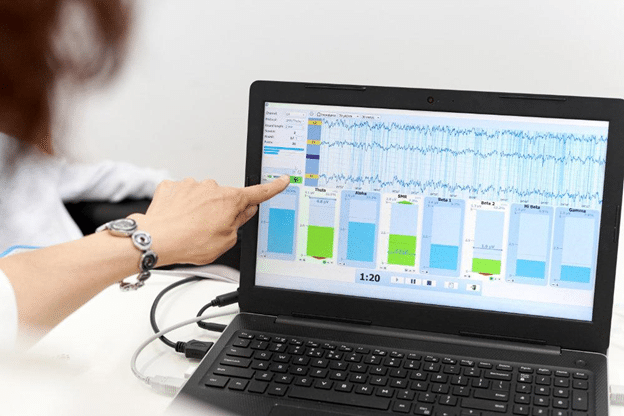
Different types of biofeedback therapy change how services are delivered and how members experience them.
HRV Biofeedback
Often used in stress management therapy, this focuses on breathing and regulation. Results vary, which can influence how progress is perceived.
EMG Biofeedback
This connects muscle activity with real-time feedback. It tends to feel more tangible but still requires consistency outside sessions.
Thermal Biofeedback
Used in relaxation therapy, this is slower and less obvious. Without explanation, it can feel disconnected from results.
Neurofeedback
This introduces more complexity. Expectations are often higher, and so is the need for clear communication. This is also where questions around liability insurance for neurofeedback providers become more relevant.
Where Biofeedback Helps and Where Expectations Shift
Biofeedback therapy is typically part of a broader system rather than a standalone solution.
It’s often used in:
- stress management therapy
- relaxation therapy
- mental health therapy support
The goal isn’t immediate change. It’s improving how the body responds over time.
That distinction isn’t always clear at the start. Members often expect fast results. When progress is gradual, expectations can shift, which is where most misunderstandings begin.
What Insurance Do Biofeedback Providers Need?
Biofeedback services sit in a category where standard coverage may apply, but not always completely.
At a minimum, most operators need:
- therapy liability insurance
- professional liability coverage
As services expand, especially into neurofeedback or more advanced offerings, coverage needs become more specific.
Questions like what insurance do biofeedback therapists need tend to come up once services evolve beyond basic offerings.
Coverage should reflect how your business actually operates, not just how it’s categorized.
| Your situation | Is it likely covered by a standard fitness/wellness policy? |
|---|---|
| Basic biofeedback (HRV, thermal) added to existing services | Often partly — confirm interpretation-related claims are included |
| Neurofeedback services | Frequently no — usually needs coverage confirmed specifically |
| Group biofeedback sessions | Depends on the policy — group format changes the risk profile |
| New biofeedback equipment or software | Older policies may not automatically include new technology |
| Biofeedback offered alongside mental health support | Often needs to be explicitly listed to avoid a gap |
Coverage depends on your specific policy and how your services are categorized — confirm it in writing rather than assuming.
Where Consumer Biofeedback Devices Fit
Members often arrive with experience using at-home biofeedback tools.
That changes expectations.
The issue isn’t always accuracy. It’s an interpretation. Without guidance, data can be misunderstood, which affects how members view progress.
That adds another layer to how services are delivered.
How Biofeedback Services Progress Over Time
Sessions don’t follow a straight line.
Early sessions focus on awareness. Later sessions shift toward control. Some members move quickly. Others take longer.
Progress isn’t always obvious session to session.
That’s why expectation setting matters. If members expect constant visible change, normal variation can feel like something isn’t working.
What Members Notice Over Time
Most changes happen gradually.
Members may notice better stress response, improved control, or more consistency over time. In many cases, progress is clearer in hindsight than in the moment.
That’s why reinforcing expectations is part of the process.
Biofeedback Therapy Claim Scenarios
These examples illustrate situations a biofeedback provider could encounter. Whether a claim is covered depends on the specific policy, facts, exclusions, limits, and applicable coverage.
Misinterpreted Data Complaint
Scenario: A member interprets a normal fluctuation in their HRV reading as a medical problem and alleges the provider failed to explain it properly.
Coverage to review: Professional liability may respond to claims tied to guidance and interpretation, subject to policy terms.
How NEXO helps: NEXO helps providers confirm interpretation and communication are covered, not just the physical session.
Neurofeedback Expectation Dispute
Scenario: A neurofeedback client expects rapid results, doesn’t see them, and files a complaint alleging the service was misrepresented.
Coverage to review: Professional liability may respond to claims tied to how a service was explained and set up, subject to policy terms.
How NEXO helps: NEXO helps confirm neurofeedback is explicitly covered rather than assumed under a general wellness policy.
Group Session Oversight Claim
Scenario: In a group biofeedback session, one participant misunderstands their data and later claims inadequate individual guidance.
Coverage to review: Professional liability may be relevant depending on the allegations and how the policy treats group formats.
How NEXO helps: NEXO writes coverage that accounts for group-format sessions, not just one-on-one work.
Equipment Malfunction
Scenario: A sensor malfunctions mid-session and gives a client inaccurate readings that lead to a dispute.
Coverage to review: General liability and equipment coverage may respond depending on the cause and policy terms.
How NEXO helps: NEXO helps confirm technology and equipment issues are addressed in the policy, not just the space itself.
New Modality Added Without Updating Coverage
Scenario: A provider adds neurofeedback to an existing biofeedback practice without reviewing their policy, and a claim arises that the old policy doesn’t address.
Coverage to review: Services not reflected on a policy may not be covered — additions need to be confirmed before they’re offered.
How NEXO helps: NEXO reviews coverage whenever a provider expands modalities so growth doesn’t create a silent gap.